ELC Publications
ELC: Visionary Thinking Over the Years
-
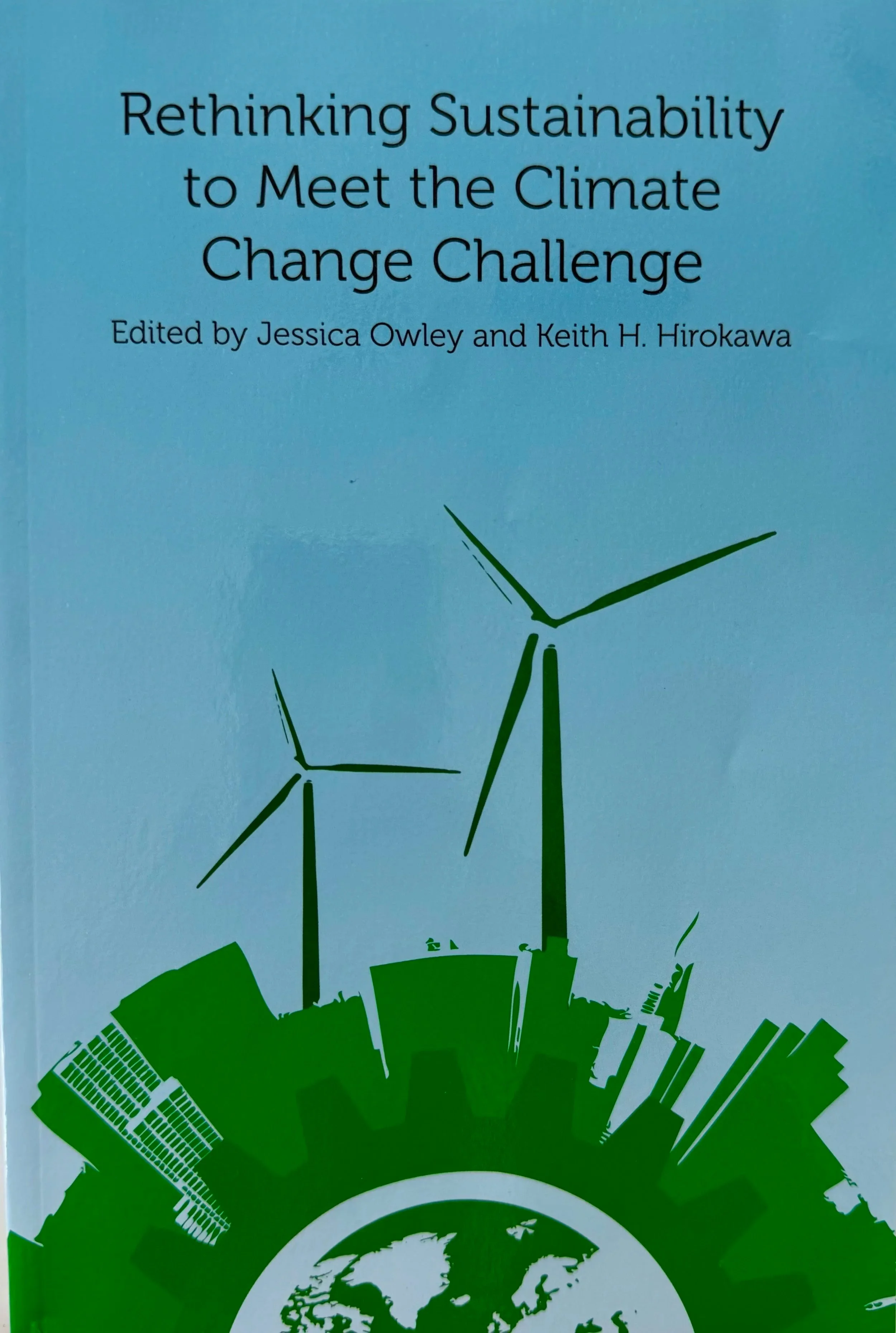
ELC Volume 1:Rethinking Sustainability to Meet the Climate Change Challenge
Has the concept of sustainability as we know it reached the end of its useful life? It is a term that means many things to many people, but it has been a positive driving force across all levels of society in a broad-based effort—either through laws and treaties or voluntary action—to keep our planet and our people healthy. But none of those efforts have managed to prevent climate change. It’s a reality that’s here to stay, and it’s bigger than we would have imagined even 20 years ago.
This volume presents a collection of papers from experts in the field articulating a wide range of thoughtful ways in which various conceptions of sustainability need to be re-examined, refined, or articulated in greater detail to address these challenges. The chapters reflect the kind of thoughtful and sophisticated thinking that is needed to accelerate the transition to sustainability in the face of a changing climate. As editors Jessica Owley and Keith Hirokawa note, one of the main challenges is the need for a better understanding of the issues and developing the proper means of communicating them.
The chapter authors demonstrate that sustainability provides a creative space within which to develop ideas and proposals to further social, economic, and environmental goals at the same time. Many propose new or modified laws and policies. All of them contribute to a constructive and helpful discussion about how to address what is easily one of the most difficult and important questions facing the planet.
-
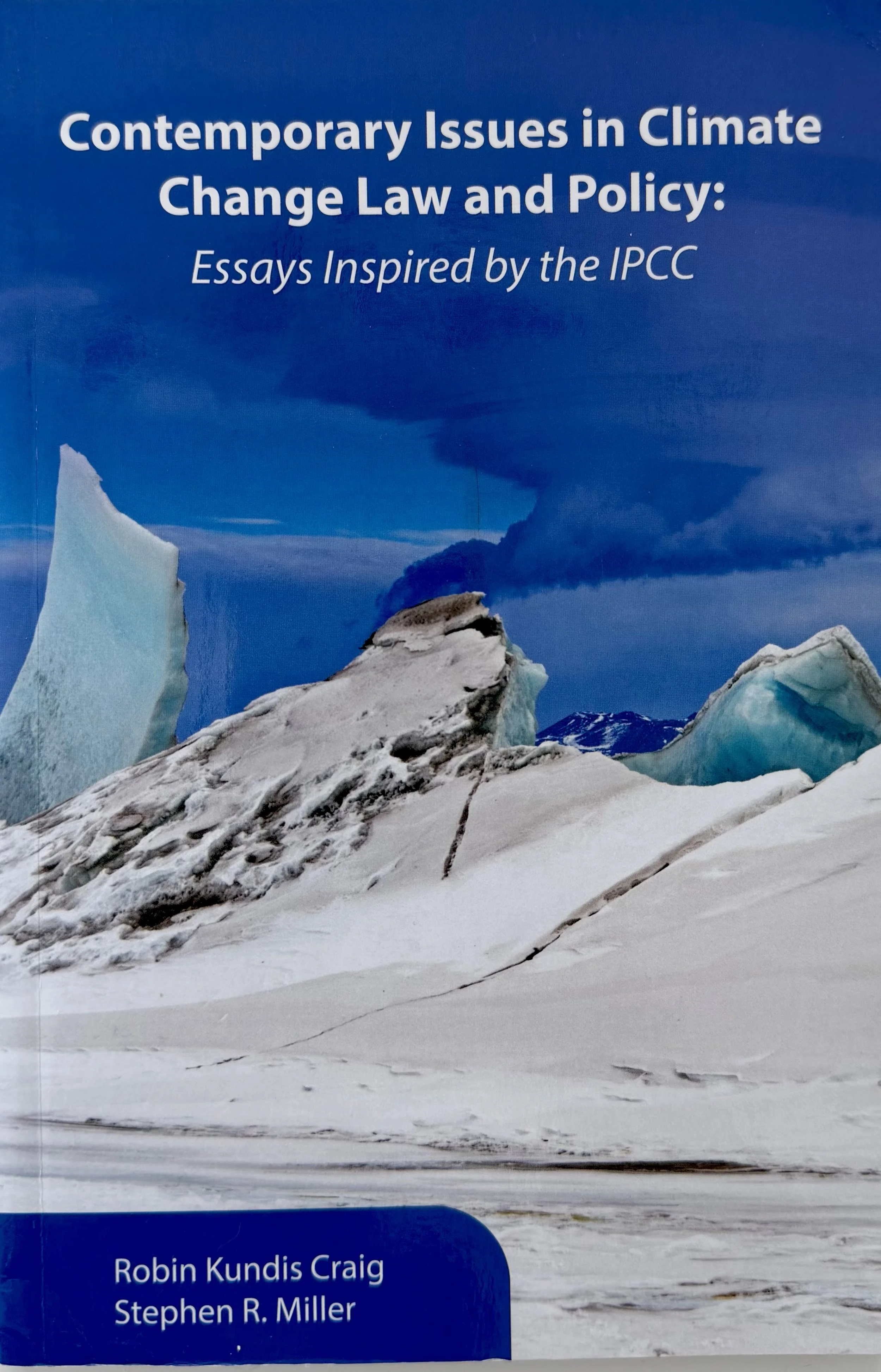
ELC Volume 2: Contemporary Issues in Climate Change Law and Policy: Essays Inspired by the IPCC
The Intergovernmental Panel on Climate Change’s most recent set of reports, generally referred to collectively as the Fifth Assessment Report, present significant data and findings about climate change. But what role does law play in addressing and responding to these findings? This book, the second by the Environmental Law Collaborative, an affiliation of environmental law professors, focuses on the relationship between law and the Fifth Assessment Report in hopes of bridging this gap. This book’s chapters are illustrative of the overwhelming number of legal issues that climate change creates. Some of the contributions remain directly tied to the text of the IPCC’s reports, while others focus on climate change more generally. Together, this volume contributes to a constructive and helpful discussion about how to address the climate change challenge.
-
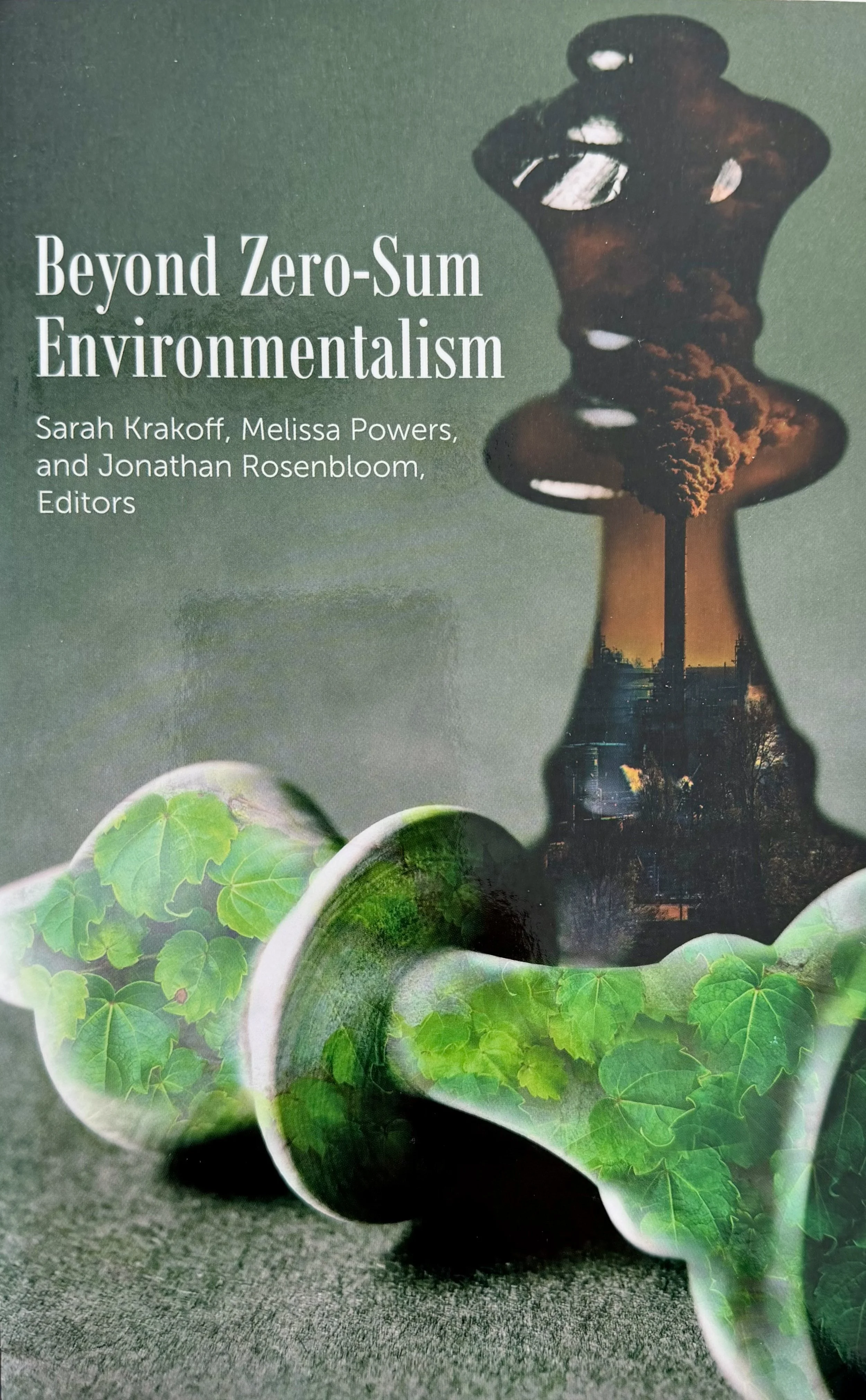
ELC Volume 3: Beyond Zero-Sum Environmentalism
Environmental law and environmental protection have long been portrayed as requiring tradeoffs between incompatible ends: “jobs versus environment;” “markets versus regulation;” “enforcement versus incentives.” Behind these views are a variety of concerns, including resistance to government regulation, skepticism about the importance or extent of environmental harms, and sometimes even pro-environmental views about the limits of Earth’s carrying capacity. This framework is perhaps best illustrated by the Trump Administration, whose rationales for a host of environmental and natural resources policies have embraced a zero-sum approach, seemingly preferring a world divided into winners and losers. Given the many significant challenges we face, does playing the zero-sum game cause more harm than good? And, if so, how do we move beyond it?
This book is the third in a series of books authored by members of the Environmental Law Collaborative (ELC), an affiliation of environmental law professors that began in 2011. In it, the authors tackle the origins and meanings of zero-sum frameworks and assess their implications for natural resource and environmental protection. The authors have different angles on the usefulness and limitations of zero-sum framing, but all go beyond the oversimplified view that environmental protection always imposes a dead loss on some other societal value.
-
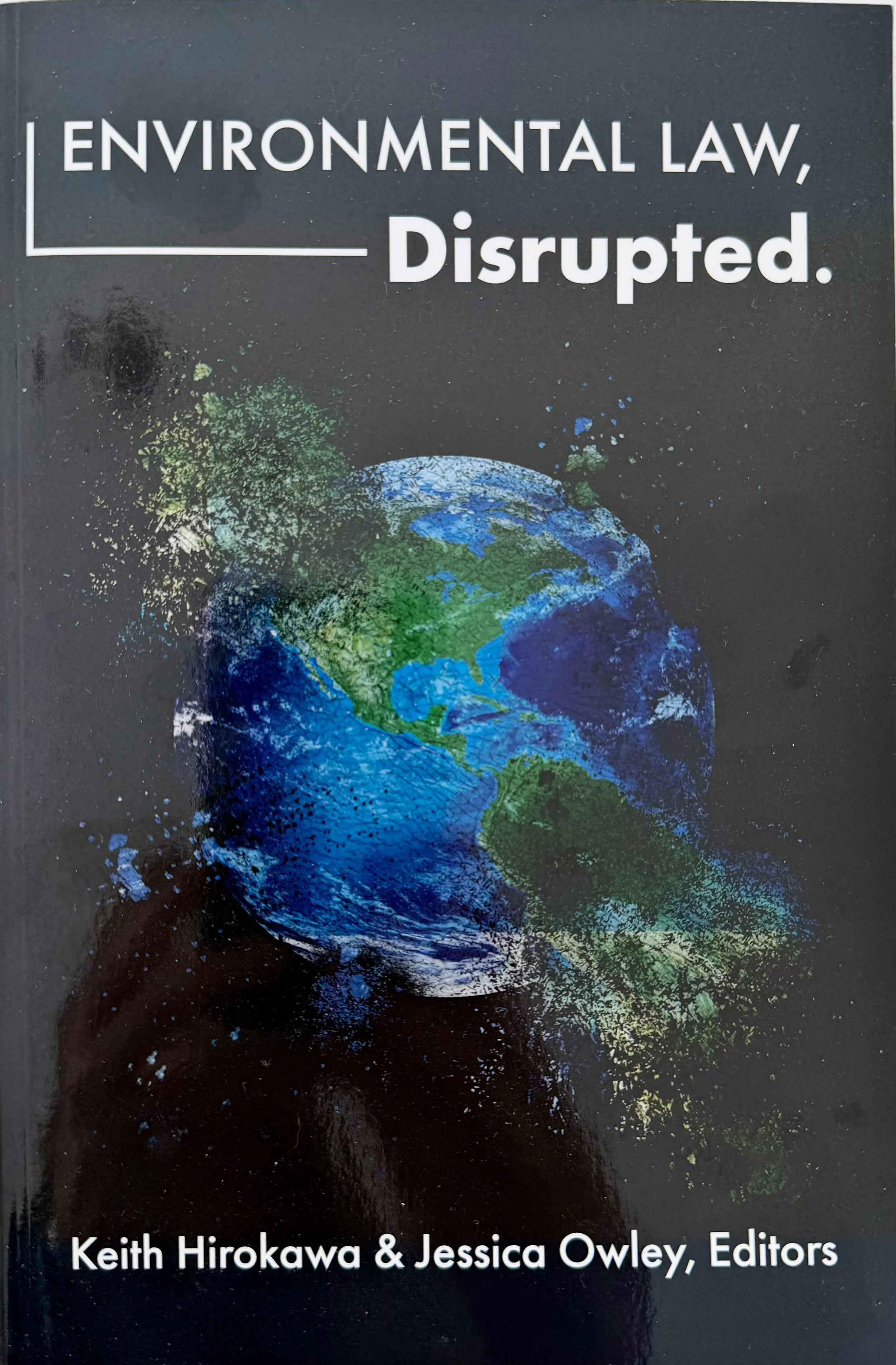
ELC Volume 4: Environmental Law, Disrupted.
To date, U.S. law has largely served as an obstacle to an honest assessment of our preparedness to face the climate change challenge. Given that society has become comfortable amidst mild climatic conditions, and given a pervasive reluctance to change, extreme and abrupt climatic changes will hit hard. Our current legal structure maintains a dangerous status quo and it is time to unleash the potential of communities and the private sector to produce innovative solutions.
This book, the fourth in a series by the Environmental Law Collaborative, addresses disruption from a variety of influences and perspectives. Some essays consider the disruptive effects of environmental changes on human and ecological safety, security, and well-being, suggesting that the impacts of climate changes are not accounted for in the current legal system. Some identify key changes needed to respond to climatic challenges, social inequities, and dwindling grey and green resources. Others deconstruct social, political, and professional frameworks to understand how such influences might be used to disrupt the current regime, or even ones where expectations are being disrupted with the endorsement of law. Taken together, these essays provide an understanding of the cause, effect, and opportunity that environmental disruption presents in the climate change era.
-
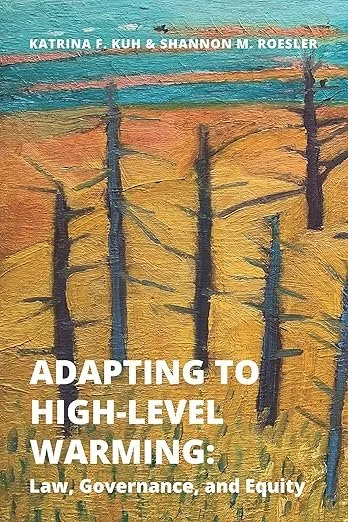
ELC Volume 5:Adapting to High-Level Warming: Law, Governance, and Equity
In seeking and analyzing climate solutions, most legal scholarship assumes a 2°C warming as the upper bound of temperature change. Yet robust science increasingly tells us a different story: warming beyond 2°C is likely, and warming as high as 3°–4°C by the end of the 21st century is a real possibility. Warming of this magnitude would have significant impacts on people. How can governance systems and institutions adapt, today, to prepare us for these future shocks? And what will be the general and specific challenges to law and policy?
The contributors to this book, the fifth in a series by the Environmental Law Collaborative, have taken up the challenge of thinking about law, governance, equity, and justice in a future shaped by high levels of warming. It begins by identifying and offering solutions to address the mismatch between today’s legal and regulatory systems and the conditions and demands of high-level warming. The next set of chapters imagine more broadly the challenges of effective governance―across a range of laws, through democratic processes―under high-level warming. The book’s concluding chapters focus on equity and justice.
Many of the ideas proposed in this book may sound wildly ambitious today but will ultimately appear modest when weighed against the tolls of a superheated climate.
-
ELC Volume 6: Forthcoming!
Description goes here -
Environmental Law Reporter 2021: ENVIRONMENTAL LAW, DISRUPTED BY COVID-19
Description goes here -
Environmental Law Reporter 2022: Adapting to a 4°C World
Description goes here -
Environmental Law Reporter 2023: Living the Good Life in the Anthropocene
Description goes here